Reflections from Disability:IN
Brian Birnbaum
CEO, Birnbaum Interpreting Services
And I realized: no one remembers the pitch. What they remember is the feeling. The connection. The moment.
Mark Byrne
Mark, can you share a bit about your experience attending Disability:IN? It was your first time, right?
“It was a moment of panic, and then perspective. I wasn’t ready for that moment, but I’m grateful it happened.”
— Mark Byrne
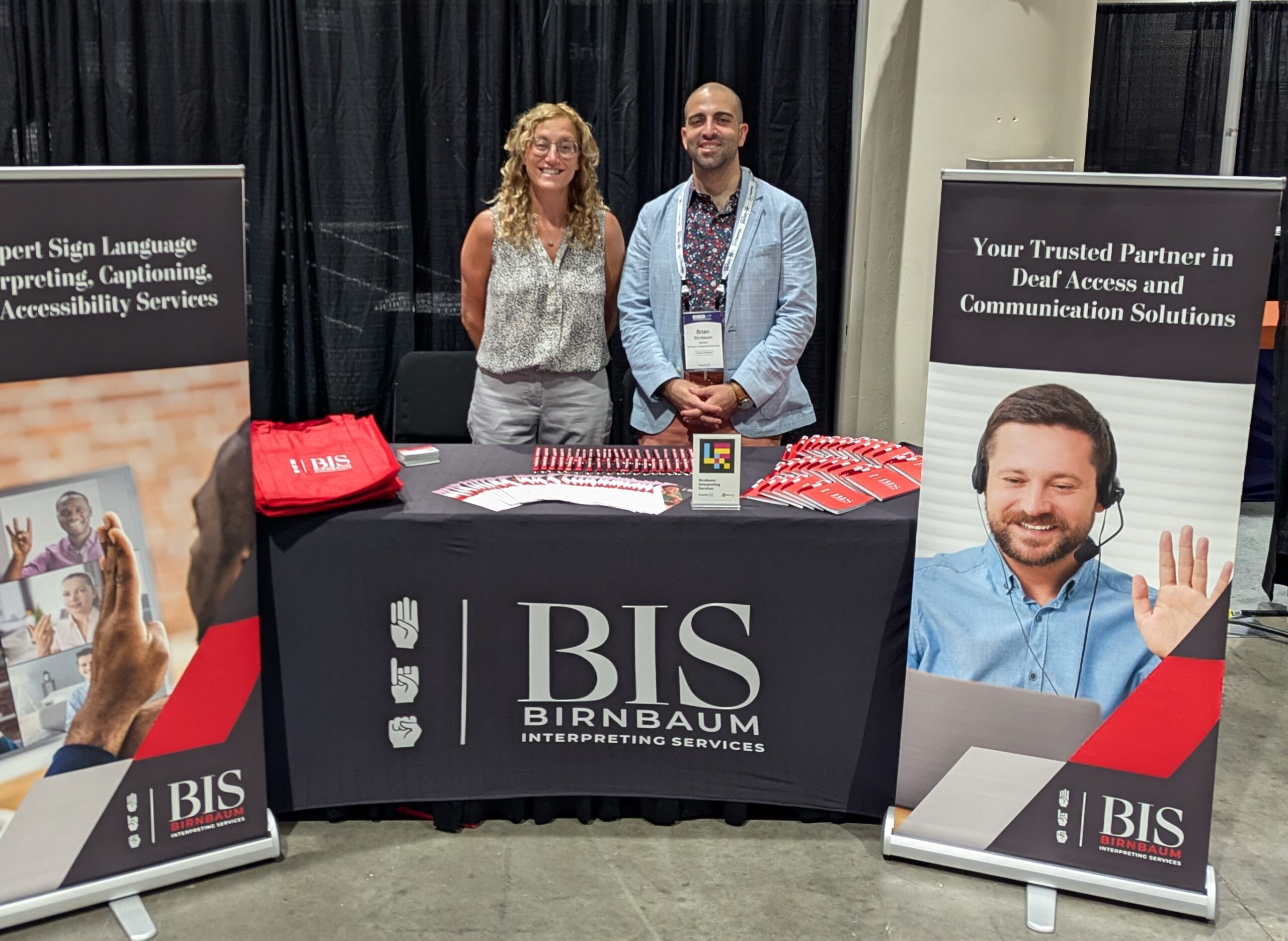
“Sure, Brian, I’ll share a moment and share a little about something I didn’t expect. I was walking the floor, doing what we do, introducing myself, saying hi, explaining who we are, and what we do.
And I walked up to a booth, and the person at the table greeted me in sign language. I just froze. Like, a wave of panic came over me. I wanted to respond, I wanted to connect, but I wasn’t equipped for that moment.
I didn’t know how to apologize or where to look for help, or what to do next. And for a minute, I felt kind of helpless.
Later that night, I was back in my hotel room thinking about the day, and that moment really stuck with me. And I realized, yeah, that feeling I had? That’s what so many Deaf or hard-of-hearing folks probably experience on a regular basis.
That discomfort, that disconnect.
I was lucky, you were nearby, and you came over and interpreted for me. We ended up having a great conversation. But I keep thinking about how important that was for me, personally.
It kind of hit me that even though I work in accessibility, in language access, in sales, I don’t always sit in the end-user experience. I’m focused on deals and partnerships, and outcomes.
But that moment, it reminded me: we’re in a privileged space at BIS. What we do, helping people access healthcare, education, basic life services, it matters.
It’s not just what we offer; it’s what it makes possible for others.”
Clare Schmitt
Clare, you helped guide our event strategy and support our presence during the rebrand rollout, but this experience seemed to hit home for you in an unexpected way. Can you walk us through what happened at the booth?
“Inclusion isn’t about accommodating people. It’s about building environments where no one ever feels excluded in the first place.”
— Clare Schmitt
“One of the most powerful conversations I had at Disability:IN was also one of the most unexpected. I don’t do much consulting anymore, but when you approached me with this opportunity to support BIS with the rebrand and event strategy, I said yes.
As a teenager, I lived with my aunt, who supported adults with disabilities in a group home she founded, so inclusion has always been one of my core values from a young age.
So I was working the booth, and this man comes over and starts signing to me. And I froze. I don’t sign. Yet. I panicked for a second.
But Connie, our VP of Operations, was there with me, and she immediately stepped in. I spoke; she signed. He signed; she interpreted.
It was a little awkward at first, he mentioned his daughter was studying to be an ASL interpreter, and then he kind of surprised me. He just looked at me and said, ‘So tell me what’s different about BIS.’
So I turn to Connie, thinking she’s going to take this, but he says, “No, you.” So I did! I gave my spiel, really, I gave my heart.
I talked about who we are, what we do, and why this work matters. Connie signed everything, and he responded, and Connie signed back.
And the three of us just… had a conversation. By the end, it felt normal. Like, truly, beautifully normal.
What started as an awkward, unfamiliar moment became the most natural, engaging conversation of the day.
What I realized later is that I was the one in that moment who felt like the outsider. Not because of anything anyone did, but because I couldn’t communicate fluently in that setting.
And that moment was the highlight of the conference for me. I’ve told that story a dozen times since.
Because it made something tangible that we talk about all the time in theory: inclusion isn’t about accommodating people. It’s about building environments where no one ever feels excluded in the first place.
I came away with a renewed sense of purpose and a deep respect for the kind of inclusive design BIS champions.”
What We’re Taking With Us
At the end of the day, we left Disability:IN with something far more important than a stack of business cards or a list of leads: renewed clarity on why we do this.
We walked away, reminded that the most meaningful outcomes don’t come from transactions; they come from shared purpose, mutual respect, and authentic connection.
At BIS, we don’t exist to pitch services. We exist to build trust. To create conversations that might not happen otherwise. To make sure that no one feels like they’re on the outside looking in.
This work is deeply personal. Whether we’re helping a parent engage in their child’s education or ensuring someone can fully participate in a work event, we’re not just providing a service.
We’re saying: you belong here.
And that’s something no pitch can ever fully capture.
It starts with us. With how we listen. With how we lead. With how we connect.